THE SOUL OF ODISSI DANCE
- Amina Boussemha
- Apr 11, 2022
- 3 min read
Updated: Sep 19, 2022
There is a famous dictum which helps us understand the intricacies of classical dance; it
says, "where the hand goes, let the glance follow, where the glance leads, the mind will follow, where the mind goes, the emotions generate and when the emotions generate, sentiment is delineated."
Namaste, my bows to you. My name is Amina Boussemha. I have moved away from my family to learn Odissi in the heart of it's origin, from where it is most pure - Bhubaneswar, India. Being alone in another country has given me so much perspective and understanding of other people. I struggle to accept not being heard everyday. I toss out whatever I am accustomed to, to make relationships with people I never would have thought I'd speak with.
There is a quote by Brené Brown, a professor at the university of Houston, which in my situation resonates. "Vulnerability is the birthplace of innovation, creativity, and change." Whatever the count of years my studies may be in this art form, I consider my vulnerability to be my credibility. The very fact of being in another country brings so many different aspects of my learning to light.
Dance means movement, let's elaborate on that. In eastern Vedic philosophy dance is created by the Supreme Being or God and in that verification to him being the Supreme Person, He is worshiped as a personality, opening all waves of love and reciprocation to His creation.
In the Vedas it is described that, in being a part and parcel of the Supreme, our activities are akin to His in mundane quality and minute quantity. There are five main types of relationships we as human beings experience; reverential, servitorship, friendship, parental affection and conjugal, and for each relationship God has enumerable pastimes. He is not limited. Thus the Vedas provide us with every situation or interaction possible in which a person or living entity can relate to, experience or encounter. This being said, I like to describe Odissi Dance as celestial because of the sole purpose of its presentation; to depict divine pastimes of God as an offering to Him. Offerings made in love and devotion to God give us the purpose and fulfillment we long for. I have come to realize that everyone is satisfied when we glorify God. But when we try to glorify ourselves, we develop animosity towards each other.
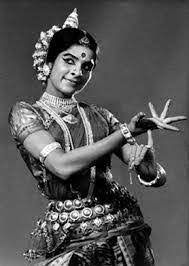
Odissi dance was sprouted by a group of artistic woman who dedicated their lives to the worship and service of Lord Jagannath, the presiding deity of the state of Odisha, which is located on the eastern shores of India. These woman were seen by society as sacred priestesses, and they presented devotional dance offerings inside the temple hall for the deity. No one but the temple courtiers were privileged to witness such an offering of selfless love.
Now what are the effects of this type of activity?
There is a quote by Kamand Kajouri, a Sufi inspired poet who wrote "You have no choice, you must leave your ego at the doorstep before you enter love." I have a question for you. What do you feel truly gives you happiness? Serving yourself or serving others? Do you feel happy when you enjoy alone or with others? In my experience it's with others. Why? It is explained in the Bhagavad Gita As It Is that the soul's constitutional position is to serve. Take for example the structure of society. The president is serving his or her country, the employee is serving his or her boss, the husband is serving his wife and the mother is joyously serving her child. So rather than satisfying the ego with selfish desires, which results in the never ending fire of our lust, we can perform our activities as offerings God, which will instead, automatically lift our consciousness and transform our lust into real love. The love we are spending life times looking for.
True art is letting go, giving yourself completely but on a deeper level, with the intention to satisfy the senses of God; that is Odissi Dance. Presenting a performance not of the bodily concept, but as an offering of love from the soul, which transcends the dancer and the audience to a spiritual space.
On a last note, his Divine Grace A. C. Bhaktivedanta Swami Prabhupad, one of India's greatest scholar and revolutionary has quoted, "He who acts for his own sense gratification, either in goodness or in passion, is subject to the laws of karma, good or bad." Off the bodily conception, this art form transcends all that is mundane and that is what gives me satisfaction.


Comments